
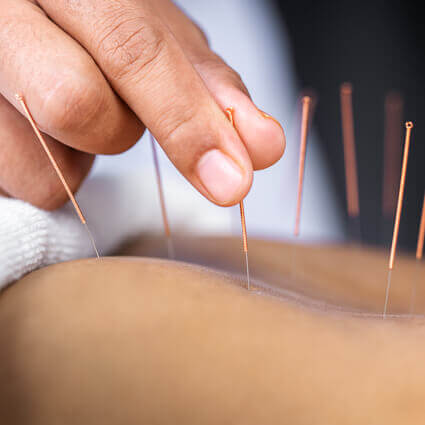
 Patients ask me about dry needling almost every day, usually right after they sit down in my treatment room. Before you let anyone pick up a needle, I want you to know what questions to ask and why my answer to “do you do dry needling” is a little more complicated than yes or no.
If you’ve ever sat in my treatment room at Muskego Health and Wellness Center, you’ve probably noticed I take my time before I touch anything. I like to talk first. So let’s talk.
A lot of patients come to me after seeing something online about dry needling, maybe a quick clip of a physical therapist releasing a knot in someone’s shoulder, and they ask if I do “that thing with the needles.” My answer is always yes, but with a question of my own: do you know who’s holding the needle, and what they were trained to do with it?
It Comes Down to One Question I Ask Every New Patient
Before I ever pick up a needle, I ask people what they’re hoping happens after this session. Not just “where does it hurt,” but what they want their body to be able to do again. Pick up their kid without wincing. Get through a workout without their hip locking up. Sleep through the night without waking up to shift positions.
That question matters because it tells me whether a single trigger point release is going to be enough, or whether we need to look at the whole picture (and most of the time, we do).
What I Tell Patients Who’ve “Already Tried” Dry Needling
I hear this a lot: “I tried dry needling somewhere else and it helped for a day or two, then the pain came right back.”
That doesn’t surprise me. If the only thing that happened was a needle going into the sore spot and coming back out, the muscle got a temporary reset, but nothing addressed why it tightened up in the first place. It’s a bit like turning off a smoke alarm without checking where the smoke is coming from.
When I treat the same area, I’m asking different questions the whole time. Is this muscle compensating for something else? Is there a nerve signal that isn’t firing the way it should? Is there a pattern showing up on the other side of the body too? Those answers change what I do with the needle, and they’re part of why patients tell me the relief tends to stick around longer.
The Conversation I Wish More People Had Before Booking
If you’re shopping around for dry needling (and there’s nothing wrong with shopping around), here are a few things worth asking whoever you’re considering:
How long is your training in needling, and what does it cover?
What happens during the session beyond the needle going in and out?
If the first spot doesn’t respond, what’s your next step?
Most practitioners will answer honestly, and the answers themselves tell you a lot. A weekend certification course covers the mechanics of inserting a needle safely. Years of formal training in acupuncture covers the mechanics, plus the diagnostic reasoning behind where, why, and what else might be going on.
What a Session With Me Actually Looks Like
Here’s the part most people don’t expect. We’ll talk before anything happens. I’ll check your movement, ask about your history, and figure out where to start. Then, depending on what we find, the needle work might include the spot that’s bothering you, a motor point that’s affecting how that muscle fires, and a few points elsewhere that are part of the bigger picture.
Some sessions are quick and targeted. Others involve more exploration, especially for patients who’ve been dealing with something for a long time and have already tried a few things that didn’t fully work. Either way, you’ll know what’s happening and why before we start, and you can always ask me to slow down or explain something again.
What I Hope You Take Away From This
I’ll be straight with you: dry needling works, and I use it all the time. What I want patients to walk away knowing is that “dry needling” isn’t one standardized thing performed the same way by everyone who offers it. The training behind the needle changes what happens with it, and that’s worth a few extra minutes of conversation before you book.
When someone sits down across from me, I’m not just thinking about the spot that hurts. I’m thinking about everything connected to it, and that’s the difference years of training makes. That’s not me trying to talk you out of dry needling elsewhere. It’s just what I want you walking in the door knowing, whether you end up in my chair or someone else’s.
If you’ve got questions about whether dry needling, acupuncture, or a combination makes sense for what you’re dealing with, that’s exactly the kind of conversation I’m happy to have before you ever see a needle. Ready to talk?